Biobanking with Hannah
Hannah is a Research Assistant in the Thoracic Oncology Research Group at Trinity College Dublin. In this post, she provides an overview of biobanking and its role in the TALenT project.
A biobank is a collection of biological samples and healthcare data donated by people for health research. The figure below gives a brief overview of the biobanking process, which begins with consenting a participant, followed by assigning them a biobank number to ensure that their specimens and data are non-identifiable. Biological samples, mainly blood and tissue, are then taken from participants through the combined efforts of doctors, nurses and other healthcare professionals. The samples are then processed by research scientists and stored for future analysis. Researchers also gather information from participants’ electronic health records and store it in a secure database, updating it regularly.
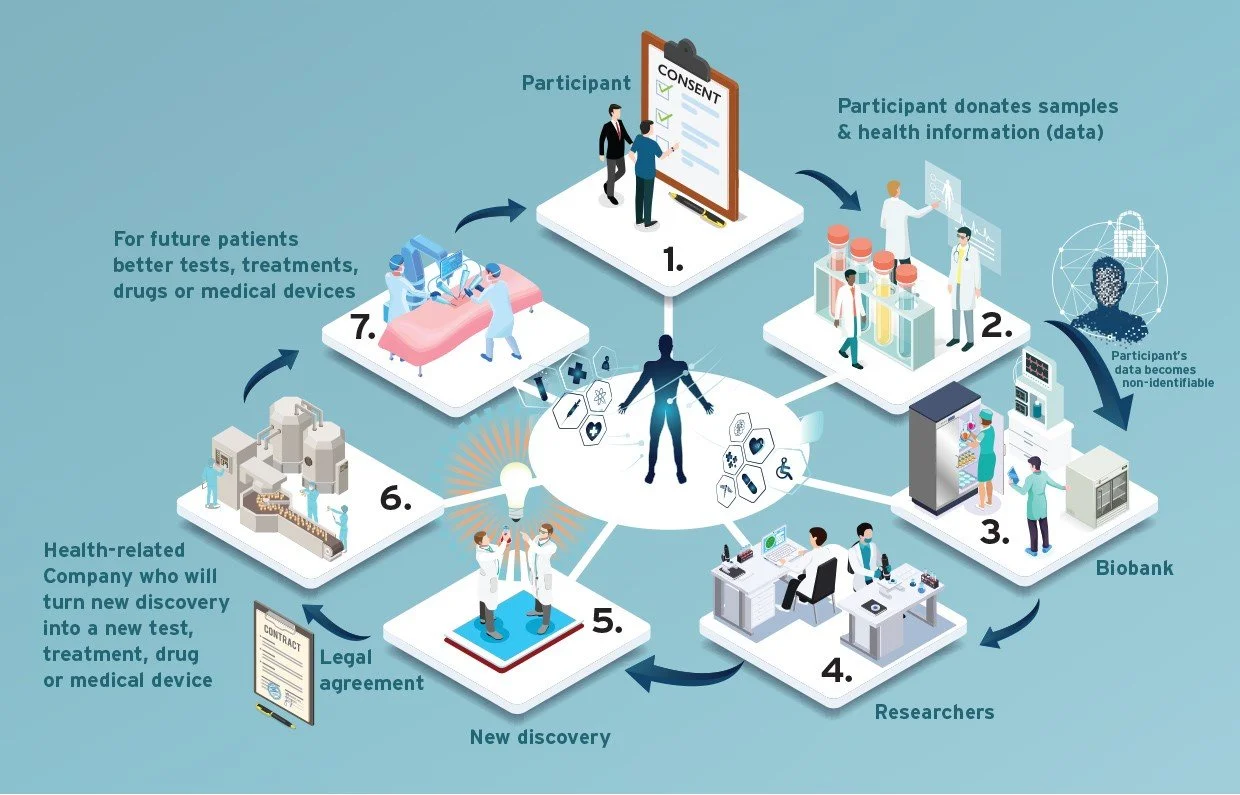
Graphic design by Rachel Lynch (rachellynch.net) was kindly sponsored by HRB/IRC TCD PPI IGNITE
The TALenT project has access to two biobanks: the Lung Cancer Biobank at St James’s Hospital and the Northern Ireland Biobank. Both of these collect blood and tissue samples, as well as healthcare data, from patients with resectable non-small cell lung cancer. Blood samples are taken prior to surgery; 1-3 days, 6 weeks and 1 year after surgery; and at relapse, if applicable. Once collected, samples processed within four hours by research scientists, as described in the figure below.
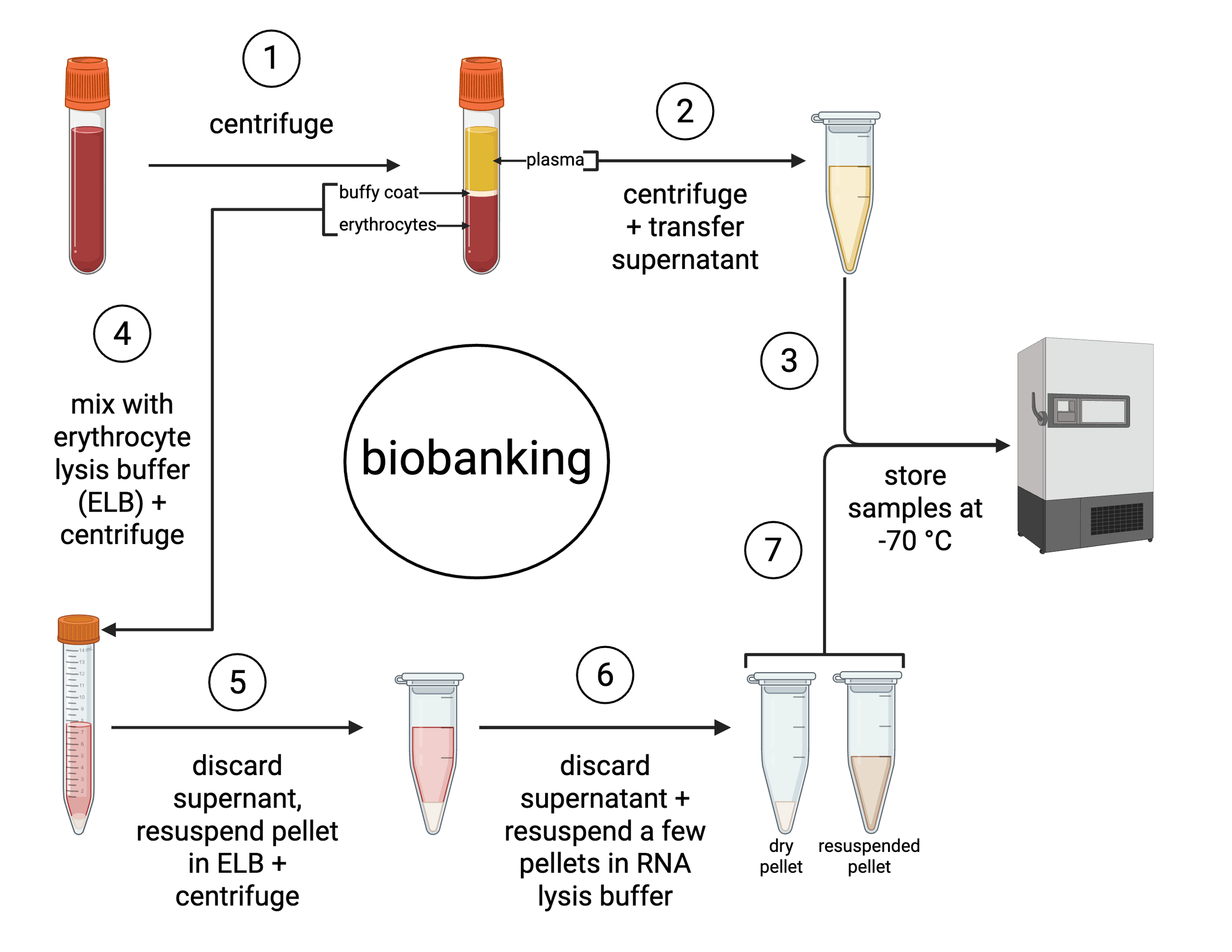
Created in https://BioRender.com
The blood sample is centrifuged at 1,900 g for 10 minutes, which separates it into three layers: plasma, buffy coat and erythrocytes.
The plasma is transferred to a falcon tube and centrifuged at 16,369 g for 10 minutes. The supernatant (purified plasma) is then transferred to microcentrifuge tubes.
These tubes are stored at –70 °C for future analysis.
The buffy coat and erythrocytes are mixed with erythrocyte lysis buffer (ELB), transferred to a falcon tube and centrifuged at 760 g for 5 minutes.
The supernatant (erythrocyte lysate) is discarded, while the pellet (peripheral blood mononuclear cells (PBMCs)) is resuspended in ELB. This is then transferred to microcentrifuge tubes, which are centrifuged at 9,300 g for 2 minutes.
The supernatant is discarded once again. Most of the pellets are left dry, while a few are resuspended in RNA lysis buffer.
These samples are also stored at –70 °C.
Subsequently, DNA will be extracted from the samples of plasma and PBMCs (negative control) and its methylation patterns and fragmentation characteristics analysed to generate circulating tumour DNA (ctDNA) methylation and fragmentomic profiles. The use of these profiles in predicting recurrence and treatment response will then be assessed using multimodal bioinformatic tools.